Meat product manufacturing: 2026 FCC Food and Beverage Report


The following information is from the 2026 FCC Food and Beverage Report, which highlights the opportunities and challenges for Canadian food manufacturers by sector. To get the big picture, read the full report.
A balance of tight supplies and shifting demand
Canada’s meat manufacturing sector spans nearly 1,000 businesses turning poultry and livestock into fresh cuts, processed meats and rendered products. The sector is mainly concentrated in Ontario, Quebec and Alberta, and processors are mostly small and mid-sized. Integrated North American supply chains keep the industry tightly connected between Canada and the United States.
Meat product manufacturing sales: 2026 forecast
Meat manufacturing sales continued to climb in 2025, marking the 12th consecutive year of growth and reaching $46.5 billion. But once again, the gains came entirely from higher prices rather than more consumption (Figure 6.1).
The main driver behind those higher prices is tight supplies of live animals. Disease outbreaks like avian influenza and persistently small cattle herds have squeezed supply from the start of the chain, pushing costs upward all the way to the consumer. These challenges won’t disappear overnight, meaning 2026 will likely see another year where price, not volume, drives sales upward. (For more information about live animal markets, see our 2026 outlooks).
Figure 6.1: Meat product manufacturing sales rise in 2026


Total sales (in $, billions) are on the vertical axis and shown by the height of each bar. The number above each bar is the year-over-year growth as a percent. Volumes are sales deflated by a price index (January 2020 = 100).
Source: FCC Economics, Statistics Canada
Volumes (that is, sales adjusted for inflation) fell 4.6% in 2025, extending the 0.3% drop seen in 2024. While part of the volume decline reflects the long-term shift toward less meat in diets, affordability was the bigger force at play in 2025. Meat prices led food inflation over the past year, prompting households to rethink their purchase decisions or substitute toward lower-cost proteins.
This dynamic exists in the export market as well, with values increasing and volumes falling in 2025. In addition, tight domestic supplies limited what was available to ship, and China’s 25% tariff on Canadian pork further limited outbound volumes.
Looking to 2026, the sector faces the ongoing challenge of balancing supply and demand amid shifting diets, uncertain trading relationships and slow production cycles for some animals. The split between rising sales and shrinking volumes is expected again in 2026, with our sales forecast up 1.6% and volumes down by 5.6%.
Sub-sector breakdown of sales
While all sub-sectors contributed to higher overall meat manufacturing sales in 2025, beef and poultry saw falling volumes (Figure 6.2). Hogs and rendering, by contrast, delivered strong gains in both sales and volumes and are positioned to continue that momentum in 2026. Rendering may face some challenges as processed foods come under greater scrutiny, but its value proposition of lower price and convenience should continue to support demand in the near term.
Beef remains a strong revenue generator at 29% of sales, yet it’s the smallest contributor in volume terms, where rendering takes the top spot with 31%. Although meat remains a staple in Canadian households, these patterns underscore the degree of substitution occurring within the category as consumers navigate price differences, preferences and affordability.
Figure 6.2: Sub-sector sales change between 2024 and 2025


Sources: Statistics Canada, FCC Economics
Ingredient insights: Livestock
Live animal prices remain one of the most important cost drivers for the meat manufacturing sector, accounting for roughly 40% of total input costs. Fluctuations in livestock prices stem from supply and demand fundamentals including weather, feed costs, technology, consumer preferences, population and income levels. Over the past several years, a combination of these forces has pushed cattle and hog prices higher, though the sources of pressure differ between the two markets.
For cattle, recent price increases have been driven primarily by supply constraints. The Canadian cattle herd contracted in the last five years driving the supply (head) of cattle down by 4.2%, while demand increased by 8.3%, resulting in a 3.3% drawdown in inventories. A similar trend is evident across North America, which exacerbated the challenge, given the markets are highly integrated. The reasons for the lower supply have been well documented. Cyclical supply and demand are not unusual, even under ideal conditions, as the biological lag in livestock production limits how quickly the supply chain can respond to market signals.
Hogs, by contrast, have seen tighter conditions, largely due to stronger demand. Domestic consumption and exports have expanded, and because consumers substitute between beef and pork, elevated beef prices have contributed to higher pork demand. Hog supply (head) declined 1.2% over the last five years, creating upward pressure on prices as inventories fell 2.0% over the same period.
In 2025, processors have responded by maximizing carcass utilization through investing in technologies to get more meat off every animal. In some cases, plants closed in 2025 because available supply was insufficient to maintain operations. This year, hog and cattle prices are expected to moderate throughout the year, remaining above 2025 for the first half but then falling towards the end, as prices retreat from highs (Figure 6.3).
Figure 6.3: Relief in livestock prices in 2026


Sources: Statistics Canada and FCC Economics
Meat manufacturing : 2026 margins forecast
Higher revenues supported meat manufacturing gross margins in 2025, reversing the two-year decline seen in 2023 and 2024. Margins are forecast to increase again in 2026, returning to 2019 levels as raw material costs start to fall (Figure 6.4). Hogs and cattle will lead the decline in raw material costs, although poultry prices are expected to rise again this year amid a tighter supply of birds and strong demand.
Figure 6.4: Meat product manufacturing margins see relief


Sources: Statistics Canada, FCC Economics
Global markets for pork and beef and animal disease for poultry and pork remain factors that could weigh on margins this year. China’s tariffs on Canadian pork persist despite negotiations early in 2026 and the impacts of voluntary country of origin labelling in the U.S. remain uncertain. Both have the potential to reduce export opportunities and cause prices to fall if export demand softens. Overall, margins will depend on how processors navigate tight supplies of raw materials, shifting consumer preferences and evolving global trade conditions.
Other trends to monitor in 2026
Plant-based momentum has cooled as consumers push back on the taste, price and ultra‑processed ingredients, though the long‑term shift toward sustainability and health-consciousness still warrants attention by the meat manufacturing sector.
New U.S. voluntary country of origin labelling rules could curb demand for Canadian livestock and push more animals back to domestic plants, likely at discounted prices.
A 2025 Health Canada consultation on cloned meat sparked consumer backlash and shows consumers increasingly expect clear labelling and transparency in their food products.
The end of the Agri-Food Immigration Pilot in 2025 leaves meat processors concerned about continued access to year-round workers skilled in meat processing roles such as industrial butchers.
Get all the latest sector and sales trends in the full Food & Beverage Report.
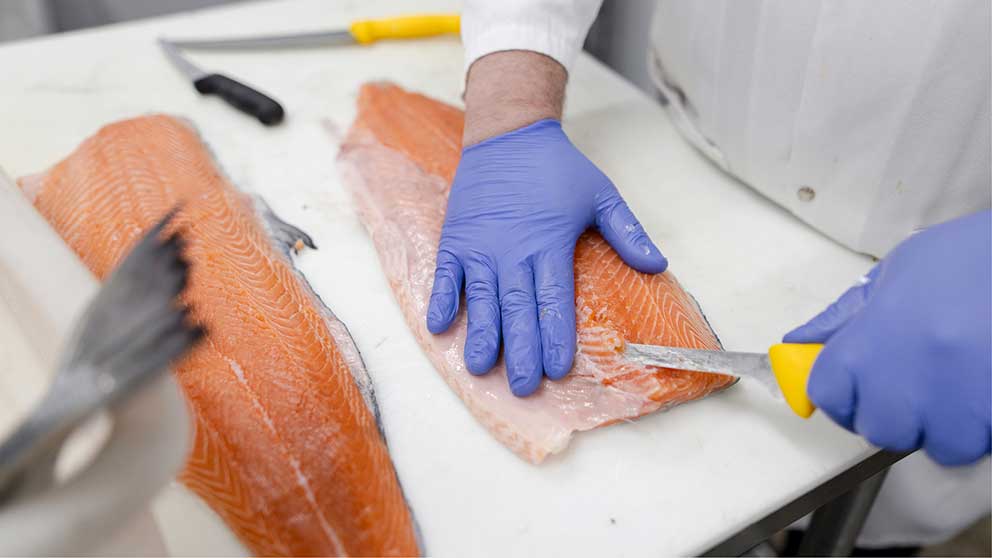
Get FCC Economics projections for seafood preparation in 2026.


Let's talk and see if our financing might be right for you. Contact your local Corporate and Commercial team to see how we can help.


Get the latest industry news, trends and advice right to your inbox.