What responsibilities should my child start with on the farm?


Business Advisor
FCC
Woodstock, Ont.
Start by asking: Where does my child feel confident, and where do they still need to grow?
I sometimes see situations where the next generation feels stuck. This isn’t because they lack ability, but because they’re not yet trusted with decisions. Meanwhile, parents might hesitate to let go.
Bridging that gap starts with an open conversation around readiness. Are both generations willing, ready and able to take on (or give up) responsibility?
From there, decide what responsibilities can realistically be handed off. On a dairy farm, it might be breeding decisions or calf care. On a cash crop operation, your child could take over spraying, for example. Financially, you might agree that purchases under a certain amount can be decided independently, but those above require either a text or a call to approve, or a family meeting.
Also consider: Can my farm absorb a poor decision? It’s about creating a safety net: a framework where decisions are real, but risk is managed.
One helpful approach is to think of farm succession in stages, by transferring labour first, then management decisions, then ownership.
Set intentional timelines for each hand-off. Build in opportunities for planning meetings. And remember: mistakes may happen, but that’s how confidence is built.
Age and stage matter too, and every farm is different. If the kids are preteens, there may be aspects of the operation they can reasonably handle, such as labour. If they’ve just returned from university, their new skillsets may be tapped into. If the kids are in their thirties/forties or older, the conversation and responsibilities can evolve significantly.
A great place to start is with FCC’s assessment tools: Knowledge Gaps and Training Needs and Roles and Responsibilities. These can help clarify who’s ready for what and build a thoughtful plan to move forward, together.
Succession is a journey. The success of the next generation is also often directly tied to the parents’ ability to retire securely. It pays to start the conversation early and revisit it often.


Swine farm operator
Zendalea Farms
Norwich, Ont.
When your child joins the farm, it’s not just about additional chores. It’s about helping them grow into the business. My brother and I joined the farm with our parents 20 years ago. Since then, we’ve grown steadily from a farm run by my brother, father and me to having six full-time and two part-time staff members – and Dad has fully retired. From my experience, there are a few things that really helped make the transition work.
First, treat your child like a valued member of the team, not just an employee. If they may take over one day, they need to be in essential roles early. Let their voice be heard but also encourage them to listen and learn.
Second, encourage them to bring something new. It could be mechanical expertise, a new skillset from school or a course, or experience gained from a previous job. It should be something that’s theirs and adds to the overall value and development of the business while creating a genuine sense of contribution.
I also think it’s important they own a specific area of responsibility. It doesn’t have to be everything, but it should be more than just showing up. Give them a task they can be fully accountable for. This might add pressure and feel stressful at times, but can foster a sense of pride and fulfilment.
Another thing that’s worked for us is having some financial buy-in. My brother and I bought into a new swine barn early on. With that move, ‘Dad’s farm’ became ‘our farm.’ Even buying a few animals or a piece of equipment can provide a sense of ownership, with relatively low risk. If it doesn’t work out, perhaps the business could absorb the loss and compensate them for their efforts.
And finally, just talk. Communication really is key. One generation may want to maintain the status quo, while the next may seek growth. That gap only grows bigger if no one’s talking. You’ve got to be clear about how the farm runs, where it’s headed and how everyone fits in – now and into the future.
Six ways to ease your child into farm decisions
Start with a strengths check-in
Ask what your child feels ready to take on and where they’d like more experience.Match responsibilities to their stage
When your child decides to join the farm, move from hands-on chores to managing specific operations.Encourage a financial stake
Let them invest in something and make financial decisions. This builds commitment and real-world learning.Bring in new skills
Tap into what they’re good at. Fresh ideas can strengthen the operation and help them build confidence.Talk it out, early and often
Create clear decision boundaries and revisit them as responsibilities grow.Use a phased approach
Begin with day-to-day work, then gradually involve them in planning and, eventually, ownership.
From an AgriSuccess article by Kim Sheppard
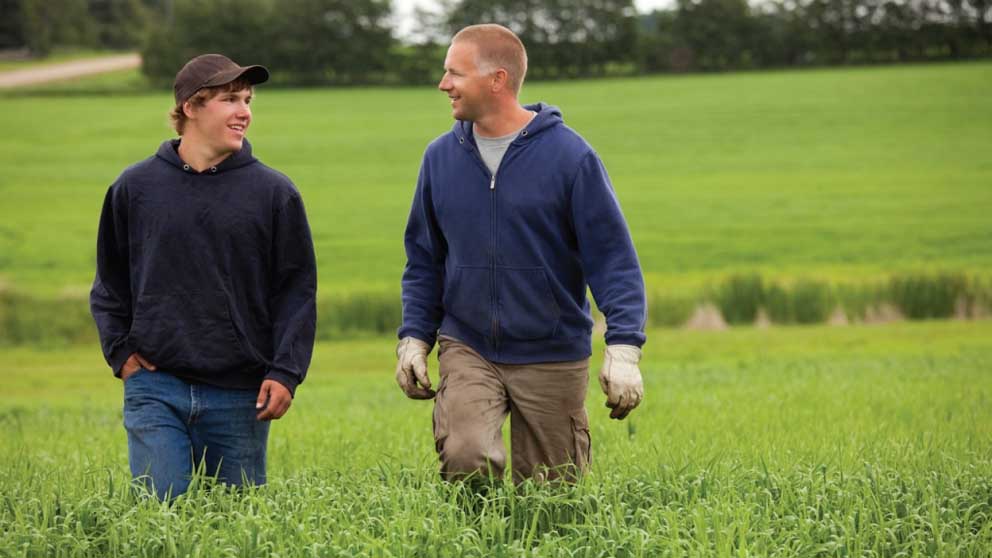
Transferring the farm to the next generation can be emotionally and logistically complex for everyone involved. A transition planning expert offers advice for making it easier.
From cash flow planning to net worth statements, get the basics you need to prepare for a loan application.


Transition looks different for every family. Use our planning tool to help you identify where you are in the process and what to do next.